



Blog / Richmond Ford Service

Does Your Ford Need an Alternator Repair?

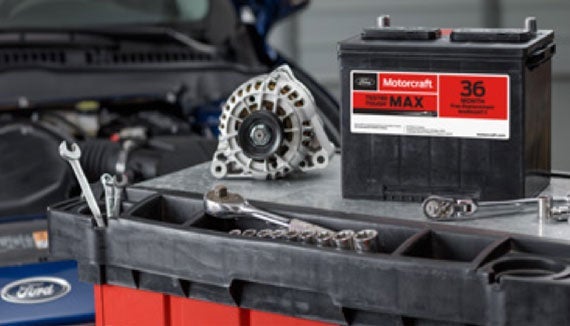
Your Ford alternator is responsible for generating electricity for all your car's systems and devices. It converts mechanical energy generated by the turning crankshaft into DC. Over time the alternator can become damaged or fail. If either of these events happens, it's time to see your friendly Ford dealer for an alternator repair. These are a few signs your alternator could be in trouble.

Blown Fuses

All the electrical systems in your car have fuses, and these fuses work identically to the fuses in your home. The fuses are designed to absorb electrical shorts or rogue electrical charges to prevent damage to their attached system. A fuse will blow out, and the system it's attached to will shut down until the fuse is replaced.

If the alternator fuse blows, this creates a problem for your car. The alternator will automatically shut down, cutting off the electrical supply to your car's systems. The battery will take over in supplying electricity, but its storage capacity is very limited. A fully-charged battery will usually run down in less than an hour. We can easily test your fuses and replace a blown alternator fuse. Once this is done, your alternator will work normally.

Dim Lights

Dim headlights, dash lights, and cabin lights can all be signs of an alternator problem. When your engine is running, the alternator supplies power to all these systems. As an alternator gets older, it slowly weakens and produces less electricity. When this problem starts, it's not immediately apparent as an alternator produces more power than your car's systems require.

As the alternator steadily declines, the reduced electrical supply will become obvious. The limited supply of electricity forces your car's computer to assign power to systems as required. When this happens, the computer will often assign just enough power to the lights to allow them to illuminate. We can easily test your alternator, and install a new one if necessary.

Weak Battery

The alternator charges your battery, and the battery provides the power to start your engine and maintain the electrical systems when your engine is switched off. The battery can fail due to age, but it can also fail due to a weakening alternator. It requires a large electrical charge to start your engine. This power should be replaced by the alternator as you drive.

As we've seen, the alternator gradually produces less electricity. This lack of electricity will impact the battery, as eventually, the alternator won't be able to fully charge the battery. When this happens, your battery will become steadily weaker as it supplies more power than it can replace. We can easily test your alternator and replace it if it's failing.

If you're experiencing any problems with your alternator, call us right away at Gates Ford Lincoln.
Posted in:

Related Posts

Getting a New Car Battery for Your Ford

Do you need a new car battery from your Ford dealer? There are a few ways to tell when the time has come and your current battery is about to give up the ghost. Watch for the following signs, and come see us if you notice them. The Engine Cranks Slowly When you turn the key in the ignition, if your engine cranks more slowly than usual, it's often a sign that your battery is losing charge. A healthy battery should start the engine quickly and smoothly. Slow cranking is typically one of the first signs that your battery is struggling, and it's letting you know you have a little time left, but not a lot. Now is the time to start budgeting for that new battery. There Are Electrical Component Issues If you start experiencing issues with your vehicle's electrical components, such as dimming headlights, flickering dashboard lights, or the infotainment system resetting, it could indicate that your battery is failing to provide consistent power. The problem could also be your alternator, but it's hard to tell without a professional checkup. Either way, you'll likely need some repair or maintenance. The Check Engine or Battery Light Comes On Most Fords have a check engine light or a battery light on the dashboard that illuminates when there's an issue with the battery or charging system. If this light turns on, always have your battery tested by a professional. The Battery Looks Swollen or Leaking Physically inspect your battery whenever you check your oil and before the winter and summer. If the case appears swollen, bloated, or if there's any leakage, these are clear signs that the battery is damaged and needs to be replaced. Extreme temperatures can cause a battery to swell and fail. The Battery Is Old Car batteries typically last between three and five years, so if your Ford's battery is approaching or has exceeded this age range, it's wise to start considering a replacement. Battery performance can decline significantly after this period, even if there are no overt signs of failure, so, again, now's the time to start budgeting. You're Needing Frequent Jump Starts If you find yourself needing to jump-start your Ford frequently, this means the battery can no longer hold a charge effectively. While occasional jump starts may be necessary at times, especially in cold weather, frequent need for a jump is a red flag. One day, that jump just won't take and you'll be stranded. If you experience any of these symptoms, come talk to one of the professionals at Gates Ford Lincoln. Remember, a healthy battery is essential to maintaining your Ford's performance and your safety on the road.

3 Signs Your Ford Needs a Transmission Repair

Transmissions are complex pieces of machinery that convert the power of your engine into energy to move the wheels. Your Ford transmission requires regular maintenance to keep it working efficiently. If your transmission isn't working as effectively as it should, you may need a transmission repair at your Ford dealer. These are a few signs that your transmission needs to be checked. Your Transmission Won't Shift This is one of the most extreme transmission problems, but it can also be one of the easiest to repair. Your transmission should shift smoothly on the instructions of your transmission computer. If your transmission refuses to shift, your car might not be able to move at all. If your transmission has limited movement, you may not be able to access higher gears. Several issues, including a broken linkage, a failed solenoid, a low transmission fluid level, or a faulty transmission computer, can cause a shifting problem. Our technicians will need to examine your transmission to pinpoint the cause of the problem. A low level of transmission fluid, for example, can be quickly and easily rectified. A broken linkage can be replaced, as can a failed solenoid. Your transmission computer can also be updated if necessary. Leaking Seal A damaged or worn seal can cause a swift loss of transmission fluid. Transmission fluid is vital, as it enables your gears to shift. A lack of fluid will increase the temperature in the transmission. A leak will remove the friction-resistant coating provided by the fluid, and this causes damage to the gears and other transmission components. The most common site of a leak is the transmission pan gasket. This gasket is attached to the bottom of the transmission pan and is designed to prevent any leak. If your transmission hasn't been serviced for a while, this gasket can shrink, and fluid will escape. Our technicians will examine the transmission to find the source of the leak, and we'll seal the leak. Strange Noises A Ford transmission is completely silent. If you suddenly hear grinding, humming, whining, or any unusual sound, your transmission has a problem. The transmission is strongly built and very durable, but a small problem can rapidly cause damage to its components. We advise calling our service department immediately if you hear any noises while you're driving. Our Ford-trained technicians are experts at repairing transmissions, and we'll find the cause of the problem. Most strange sounds in the transmission relate to problems that can be easily repaired if they're examined as soon as the problem appears. If your transmission shows any of these signs, call us right away at Gates Ford Lincoln.

Does Your Ford Need a Transmission Repair?

Your transmission is very complex, and it can be one of the most expensive components to repair if it gets damaged. The good news is that transmissions always exhibit signs that something is wrong. Expensive transmission problems come from ignoring those warning signs. As your Ford dealer, we want your transmission to stay healthy. These are some signs that you're going to need a transmission repair. Signs You Need a Transmission Repair at Your Ford Dealer Buzzing, Whining, and Clunking A healthy transmission shifts gears silently. Noises from the transmission are always signs that something is going wrong. You may start to hear a slight, barely audible buzzing noise. If this noise is ignored, it will grow louder in time and eventually turn into a whining sound. These sounds could be due to low transmission fluid, but they can mean other problems. Our technicians will find the problem. Clunking noises can represent a variety of problems. If you hear get the noise while your engine is idling, this can be a problem with the torque convertor. The torque converter transfers your engine's power to the transmission. If the clunking sound occurs in reverse gear, this means some of the transmission support dampeners may have cracked and need replacement. Transmission Fluid Leak Transmission fluid serves several vital functions. A transmission is filled with hundreds of fast-moving parts, many of which generate friction. The fluid lubricates these parts and applies a friction-resistant coating to them to prevent damage. These parts also generate large amounts of heat, and the fluid circulates through the system to cool the temperature. A transmission leak will cause several problems, the first of which is an increase in the transmission temperature. Without the cooling effect of transmission fluid, your transmission will rapidly start to overheat. If the leak isn't fixed quickly, the transmission will overheat and seize up. Our technicians will trance the source of the leak, which usually comes from a worn or damaged seal or gasket. Check Engine Light The check engine light is connected to a variety of sensors attached throughout your car. These sensors monitor the components they're connected to for any signs of problems. They can detect very slight changes in the component. If your transmission is experiencing a problem, this will be relayed to your car's computer, causing the light to come on. The light is a warning, but by itself, it doesn't explain what the problem is. If your engine light comes on, we can connect your car's computer to our diagnostic system. Our system uses the most up-to-date technology, and it will display the error codes picked up by your computer. Our technicians will use this information to search for the problem so we can repair it. Transmission problems, as with any other problem, are the easiest and quickest to fix if they're discovered early. Early diagnosis allows our technicians to repair something before it becomes a bigger problem. If you suspect a transmission problem, call us ASAP at Gates Ford Lincoln. Image courtesy of Ford